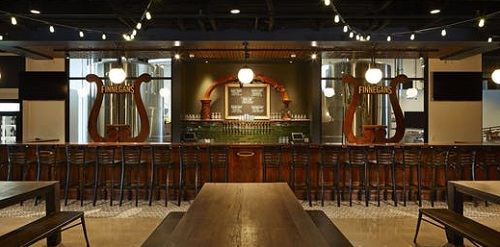
Minneapolis Parks Foundation Announces PopUp Dinner at the Minneapolis Sculpture Garden
Thursday, April 4, 2019 at 12:57PM |
Kim Eslinger | 
Kim Eslinger
Editor
612-321-8040
kim@millcitymedia.org
Brianna Ojard
Associate Editor
David Tinjum
Publisher
612-321-8020
dave@millcitymedia.org
Becky Fillinger
Small Business Reporter
Email Becky...
Mill City Times is a not-for-profit community service. We do not sell advertising on this site.
Thanks to our community partners, whose support makes Mill City Times possible:
MILL CITY FARMERS MARKET
With over 100 local farmers, food makers and artists, MCFM strives to build a local, sustainable and organic food economy in a vibrant, educational marketplace.
HENNEPIN HISTORY MUSEUM
Hennepin History Museum is your history, your museum. We preserve and share the diverse stories of Hennepin County, MN. Come visit!
Visit their website...
MEET MINNEAPOLIS
Maximizing the visitor experience of Minneapolis for the economic benefit of our community, making Minneapolis the destination of choice among travelers.
MSP FILM SOCIETY
Promoting the art of film as a medium that fosters cross-cultural understanding, education, entertainment, and exploration.
GREAT RIVER COALITION
Enhancing the Minneapolis riverfront environment—for people and pollinators.
Key contributors to the Central Riverfront Neighborhoods.
Organizations involved in preserving and rivitalizing the Mississippi River and the Minneapolis Riverfront. Thank You!
Friends of the Mississippi River
Marcy-Holmes Neighborhood Association
Minneapolis Community Planning & Economic Development
Minneapolis Park & Recreation Board
Minneapolis Riverfront Partnership
MN Mississippi River Parkway Commission
Mississippi Watershed Management Organization
National Center for Earth-surface Dynamics
River Talk | Institute on the Environment | U of M
St. Anthony Falls Heritage Board
Public spaces and landmarks along the Minneapolis Riverfront.
Grand Rounds National Scenic Byway
Mississippi National River and Recreation Area
North Mississippi Regional Park
Saint Anthony Falls Laboratory
Upper St. Anthony Falls Lock & Dam
A complete list of Minneapolis Parks.

Covering life, work, and play in the Historic Mill District and Downtown Minneapolis Riverfront neighborhoods. Have an opinion, local news or events to share? Contact us.


Two-year process will set vision for the next decade of Minneapolis Parks and Recreation
The Minneapolis Park and Recreation Board (MPRB) is excited to announce “Parks for All,” a new comprehensive planning process that will set its priorities and policy direction for the next decade.
Parks for All will engage Minneapolis residents and park users, along with MPRB staff and commissioners, over the next two years to shape the future direction of Minneapolis’ park and recreation system.
What is Parks for All?
The last MPRB Comprehensive Plan was approved in 2007 and set a vision through 2020. Parks for All is the next MPRB Comprehensive Plan, which will guide the Minneapolis park and recreation system for the next decade.
The MPRB Comprehensive Plan guides everything done by the MPRB. It articulates why the MPRB exists, identifies how the MPRB performs its work, and describes what the MPRB hopes to become.
Parks for All is separate from the recent City of Minneapolis 2040 Comprehensive Plan. It solely covers the Minneapolis park and recreation system. It will build off other recent MPRB plans including service area master plans for neighborhood parks, master plans for regional parks and other plans and policies that have been developed by MPRB in recent years with community input.
Get involved now
Community Collaborators
MPRB invites local grassroots, neighborhood and cultural organizations to convene their own conversations about the future of Minneapolis parks and recreation through the Community Collaborator program. Please consider submitting a project proposal designed to broaden community engagement for Parks for All.
Funding varies $500-$3,000 according to the project idea and proposed budget. Proposals will be accepted on a rolling basis with three rounds of submission and review in April, August and December 2019. First deadline is April 22.
Community Collaborator Application [PDF]
The MPRB is hosting two pre-proposal information sessions about the Community Collaborator program:
Both meetings are at MPRB Headquarters, 2117 West River Road. They are not mandatory.
Coming Soon
Article and photos by Merle Minda
Lunds & Byerlys Northeast has spruced up its 12-year old store with a new look, new fixtures, a more open traffic pattern and hundreds of new items. It is now ‘on-trend’, one might say – and in the swing with the newest popular products and opportunities for shoppers.
But in actuality, it is more than that. The remodeled grocery store has a cross marketing perspective. So if you are buying grapes, for example, several cheeses are right there as well. You no longer have to go halfway across the store to get them. Also, hamburger buns are in the meat department, and mini angel food cakes sit next to fresh strawberries. It’s handy and it gives shoppers ideas.
Store Manager Katie Swenson is rightfully proud of the remodeled store.
As Store Manager Katie Swenson notes “It was time for a redo; our first in the 12 years we have been here.” Amazingly the store never closed throughout this renovation, even among some of the more aggressive construction.
Ike Wagner, cheese guru, has been with this store since it opened.
The new, wider aisles for fruits and vegetables are unbelievably tempting. The fresh or “wet” racks are easier to reach and not stacked so high with product. This makes everything incredibly good to look at, almost like a country market stand or a sidewalk veggie store in New York City or even Paris. Smaller amounts of stock on the racks mean they are refilled more often making products fresher too.
Produce Manager Chris Dehart takes in fresh deliveries daily.
Ripe avocado stand takes the guesswork out of when to use them.
There are over 800 new grocery products which add a boon to any shopping experience. For example, the new Kombucha station has been installed. Fill up your “Growler” mug and take off. Coffee now comes in cold brew cans for a quick buzz – cold brew coffee is another hot new product line. And hey, how about the new vintage soda section, with interesting sodas I have never seen before. Lots to try and taste.
Cold brew coffee is a new “thing.”
Vintage sodas are fun to try.
You will find heaps of new Lunds & Byerlys branded products throughout the store – they are so appealing, from cook-it-yourself, ‘Hello Fresh’ style, to fresh pizzas or pop-in-the-oven quiches. Yet to be installed on my walk-through is a new food bar with the makings of tacos and salad options and all the hot food. One of the new installations I love is the Poke Bar, with its sushi-like fixings that you put together yourself, a first in grocery stores in our market. Bachman’s flower and plant bar installation is now like a real flower shop, expanded to twice the size and beautifully laid out. I see the Bachman’s people there daily, watering, trimming and adding fresh stock. And how many kinds of yogurt? Mind-boggling.
Pop in the microwave shrimp steamer is a delicious new product.
The Poke Bar makes for a delicious choice.
Bachman’s flower stand bigger and better than before.
With the newly installed flooring and LED lighting, the whole atmosphere is improved, making it quieter to walk through with your new smooth-moving cart. Seems like more staff on the floor to help customers as well. Or shop on your Lunds & Byerlys phone app with free drive-through pick-up. Do-it-yourself checkouts too, if you wish. Very handy, 26% of customers are using them so far!
Shoppers Kathy and David Cooper were away for a few months and returned to a totally revised store.
Plus lots of small touches, a revised product layout, with all the cold and frozen stuff behind big easy-to-open doors, keeping them much colder and the store warmer, says store manager Katie Swenson. And large new signage throughout – so you know where you are and can find things. There is clearly a lot of thought and marketing know-how behind these changes – and it all benefits the customer. The other handy installations at this location still there include Caribou Coffee, the very complete Pharmacy and drug store, the Wells Fargo ATM and St. Croix Cleaners.
At Lunds & Byerlys NE, you can do it all in just one stop! Open from 6am to midnight, just about every day of the year. (They close only on Thanksgiving, Christmas and New Year’s Day.) Get over here; it is beautiful.
Northeast Minneapolis, 25 University Avenue SE, Minneapolis, MN 55414 LundsandByerlys.com
- - - - - - - - - - - - - - - - - - - - - - -
About Merle Minda
Journalist and free-lance writer Merle Minda writes about travel, business, people profiles and other subjects for a number of national and regional publications, including Delta SKY, Mpls/St. Paul Magazine, Twin Cities Business, Star Tribune, Twin Cities Statement, Minnesota Monthly, and now Mill City Times. She can be reached at mminda@earthlink.net or TravelOverEasy.com on the web.

|
|
|
|
|
|
|
|
|
|
|
|
![]() |
|
|
25 communities to compete in Step To It challenge
Build healthy habits by joining the Step To It challenge, open to people of all ages and abilities at no cost to participants.
Track your activity online from May 1 – 28 for the chance to win prizes. Almost any activity counts, such as mowing the lawn, gardening, yoga and manual wheelchair use.
All participants are eligible for Twins tickets and Step To It t-shirts through random prize drawings conducted in each participating community.
Learn more and register at steptoit.org.

City preparing for Final Four festivities
Minneapolis is gearing up to welcome teams and fans for the 2019 NCAA Men’s Basketball Final Four April 5-8.
The City is focused on ensuring the four-day event in downtown Minneapolis is a safe and welcoming experience for visitors and residents.
In addition to the games at U.S. Bank Stadium, there will be several family-friendly events:
The City has worked with event organizers and downtown stakeholders to minimize traffic and parking disruptions as much as possible. There will be limited road and lane closures around U.S. Bank Stadium and Nicollet Mall.
There are many ways to get around downtown for Final Four activities. Transit and walking are great options. For planning to drive, park once and enjoy downtown by foot. For more tips, visit finalfourminneapolis.com and watch the recent Final Four “Know Before You Go” press conference.
City closing streets, restricting lanes around U.S. Bank Stadium, Nicollet Mall for Final Four festivities
The City began the first phase of street closures around U.S. Bank Stadium in preparation for the 2019 Final Four in downtown Minneapolis April 5-8.
Through Friday, April 12, the following streets are closed around the stadium:
Additional closures and lane restrictions begin Wednesday, April 3, as noted on the map. Roadways, bike facilities and sidewalks will reopen beginning Tuesday, April 9. Chicago Avenue South and Norm McGrew Street will be closed through Friday, April 12.
The City is also closing portions of Nicollet Mall and adjacent streets for Final Four festivities. Closures begin Monday, April 1, and all roadways will reopen Thursday, April 11 if not sooner. Note: 11th Street from Marquette Avenue South to LaSalle Avenue South will be closed intermittently April 5-8.
Pedestrian access and sidewalks along Nicollet Mall and cross streets will remain open.
The City of Minneapolis has worked closely with event organizers and stakeholders to craft a traffic management plan that will enhance the Final Four experience while minimizing disruption to traffic and parking as much as possible.
Apply for openings on Minneapolis boards and commissions
Several board and commission positions are open for City Council and mayor appointments this spring. Board and commission members in the City of Minneapolis help shape key policy decisions, give community-based input into the City’s administration of services and supply valuable insights. The City seeks applicants with a diversity of backgrounds and experiences to strengthen the work of the City. Translation and interpreting services are available on request so all residents can participate.
People can apply through the open position pages linked below and stay up to date on vacancies, position descriptions and timelines by visiting minneapolismn.gov/boards/openings. The positions are open until filled.
There are 77 open positions on 10 City boards and commissions:
Boards, commissions and advisory committees
The City of Minneapolis has more than 50 volunteer-based boards, commissions and advisory committees that advise the City on issues and help develop policy and administer services. Boards and commissions fall into a handful of categories: appeal boards, development boards, general advisory boards and special service districts (defined areas within the city with special services).
Appointments to boards and commissions are made twice a year: in the spring and fall.
Minneapolis’ appointed boards and commissions are becoming more inclusive with a steady increase in residents of color serving. A new study shows that the City has met its race diversity benchmark with board and commission members within 80 percent of the city’s demographics. Thirty-three percent of the City’s board and commission members are people of color, whereas the population of Minneapolis is 36 percent people of color.
The City still pursues more diverse representation in its appointed boards and commissions with:
Potential applicants can find more information at 612-673-2216 or OpenAppointments@minneapolismn.gov.
2019 collection of leaves and bundled brush begins week of April 8
The 2019 season for Minneapolis Solid Waste & Recycling collection of leaves, brush and other yard trimmings starts the week of April 8. Minneapolis Solid Waste & Recycling customers can set properly prepared yard waste at their alleys or curbs next to their garbage carts by 6 a.m. on garbage day.
Yard waste must be in compostable bags – paper (Kraft) or compostable plastic – or unbagged in a reusable container 26-32 inches high, no more than 26 inches wide, with sturdy handles. Reusable containers are lifted and emptied by hand; they must be easily managed. Yard waste is not allowed in City-provided garbage, recycling or organics recycling carts.
Preparing yard trimmings and leaves
Preparing brush
Reusable containers
Which bags can be used in the program?
Bags marked “biodegradable” or “degradable” do not meet the State law and are not accepted.
It’s against the law and bad for our lakes, creeks and river to rake leaves into the street.
For questions about leaf and brush pickup, customers can call Solid Waste & Recycling at 612-673-2917 between 8 a.m. and 4:30 p.m. People can also find more information here.
Youth Violence Prevention Week events March 30-April 6
The City of Minneapolis joins a national public education effort by participating in its fifth annual Youth Violence Prevention Week. Activities and events March 30-April 6 will call attention to the issue of youth violence, identify strategies to combat this public health epidemic and promote the positive roles young people and adults can play in making their communities and schools safer.
A diverse array of youth-oriented activities includes a pop-up recording session, basketball tournaments, art, dance, a girls’ symposium and personal safety workshops.
Find details in the 2019 Youth Violence Prevention Week event list.
Minneapolis among top metro areas nationwide for solar jobs growth
Minneapolis-Saint Paul is among the top metro areas nationally with Chicago, Miami and Seattle for the number of solar jobs added in 2018.
The Solar Foundation released a map on the number of solar jobs in every state, metropolitan area, county and congressional district revealing how solar energy is supporting local economies nationwide. The report found 242,343 solar workers in the United States as of 2018.
To tackle climate change, Minneapolis has set clear and ambitious goals to get Minneapolis to 100 percent clean energy by 2030. The City of Minneapolis and Xcel Energy offer these programs and uses these practices that help support solar jobs:
Find out if your home or business is right for rooftop solar.
Find the interactive solar jobs map and detailed state fact sheets at SolarStates.org. Find complete information on the National Solar Jobs Census 2018 at SolarJobsCensus.org.
Join 2020 Census celebration April 1: We Count
Join Mayor Jacob Frey, Council Member Abdi Warsame, the Minneapolis Complete Count Committee and leaders from nonprofit organizations, business and community organizations to kick off the yearlong 2020 Census complete count campaign:
We Count Minneapolis kickoff 5:30-7:30 p.m. Monday, April 1 The Center for Changing Lives, 2400 Park Ave.
We Count Minneapolis will promote awareness and participation in the 2020 Census. The goal is to ensure everyone is counted and fairly represented, regardless of immigration status, age or income level.
Getting a fair and accurate count in the 2020 Census is a major focus of the City of Minneapolis, which is the only municipality in Minnesota to dedicate funds toward the effort. Reaching historically undercounted communities will be a priority. The kickoff event will bring together community stakeholders committed to ensuring a complete count.
Find more information at minneapolismn.gov/census.
Help shape the future of transportation in Minneapolis
The City is hosting five community workshops and one online open house in April to collect public input on ways to improve the city’s transportation system as City staff develop the Minneapolis Transportation Action Plan and the Vision Zero Action Plan.
The Transportation Action Plan will be a 10-year plan to implement the transportation vision outlined in the Minneapolis 2040 Comprehensive Plan. It will develop strategies and actions on advanced mobility, pedestrian, bicycle, transit, freight, street operations and street design.
The Vision Zero Action Plan will be a three-year plan to advance the City’s commitment to ending traffic fatalities and severe injuries resulting from traffic crashes on our streets by 2027.
Community workshop (southwest) 4-6 p.m. Tuesday, April 9 Richfield Lutheran Church-Fellowship Hall, 8 W. 60th St.
Community workshop (south) 5-7 p.m. Thursday, April 11 Longfellow Recreation Center, 3435 36th Ave. S.
Community workshop (east) 4-6 p.m. Tuesday, April 16 Northeast Recreation Center, 1530 Johnson St. NE
Community workshop (Downtown) 4-6 p.m. Monday, April 22 Central Library, Doty Board Room, 300 Nicollet Mall
Community workshop (north) 5-7 p.m. Wednesday, April 24 Farview Recreation Center, 621 29th Ave. N.
Online open house (City’s Facebook page) 6:30-7:30 p.m. Tuesday, April 30 City of Minneapolis Facebook page
Public Works will conduct community engagement to gather input and feedback on these two plans throughout the year. Staff is expected to submit the plans to the City Council for approval in 2020.
Can't attend an event? You can still get involved.
You can learn more about the Transportation Action Plan and provide direct feedback on our interactive website. Our topic pages include short surveys and are a great place to share your thoughts. You can also use #gompls to talk transportation with us and follow the City of Minneapolis on Facebook, Twitter, and Instagram.
Jobs with the City
Ever considered working for the City of Minneapolis? Opportunity is knocking. The City of Minneapolis has more than 900 different job types. Find your dream job today.

The 2019 housing and community development draft action plan shows how Hennepin County and partner suburban cities plan to use approximately $4.7 million in federal funding for housing and development activities in suburban communities.
This funding is provided by the U.S. Department of Housing and Urban Development (HUD) through three federal programs:
Hennepin County will host a public hearing to gather comments and feedback on the draft plan:
Tuesday, April 16
1:30 p.m.
Hennepin County Government Center Board Room (A-2400)
300 South Sixth Street
Minneapolis, MN 55487
You may also submit written comments on the plan by 4:30 on April 30. Send written comments to:
Julia Welle Ayres
Hennepin County Community Works
701 4th Avenue South, Suite 400
Minneapolis, MN 55415

.
Read the Neighborhoods 2020 Framework Recommendations now open for public comment through Sunday, March 31, 2019.
To submit your comments:
During Final Four weekend, Jack Link’s is inviting visitors to participate in a head-to-head battle at the Wild Side store (Target Center Skyway, Level 600, 1st Avenue N) to vote between two NEW special edition batch flavors: Atomic Cinnamon and One Hot Peach.
Stop by the store Thursday, April 4 or Friday, April 5 from 11am to 6pm or Saturday, April 6 from 12pm to 5pm.
Jack Link’s will also be introducing three other limited-edition flavors of their fresh, deli-style Jack Link’s Signature Batch: Supper Club Old Fashioned, Berry Good Barbeque and Umami Boom.

Limited Edition Batch Flavor Descriptions:

Now accepting applications: Community Advisory Committee for Cedar-Riverside-based study
About the predesign study
The Minneapolis Park and Recreation Board (MPRB) is exploring the potential for building a new recreation center in the Interstate 94/Riverside Corridor, integrated into a larger development on the east end of the Augsburg University campus. The new recreation center would help supplement the programming offered at the Brian Coyle Community Center. A renovation or nearby relocation of the Brian Coyle Community Center is also being explored as part of this study. Additional information and key documents are on the project web page.
The predesign study will be guided by a community advisory committee (CAC), with members appointed by MPRB commissioners and an MPRB selection committee.
Community advisory committees provide volunteer opportunities for stakeholders to share insight and resources and serve to build and sustain relationships between the community, partner agencies, and the MPRB. Members of the CAC are expected to represent the views of park users and to work collaboratively with each other and the public to provide comprehensive recommendations to the Board about the project.
Find out more
Submit your CAC application
All applications are due by May 3, 2019.
Questions?
Contact Project Manager Dan Elias at 612-230-6435 or delias@minneapolisparks.org.
To subscribe to notices for all advisory committee opportunities, please click here.

A recent survey of Minneapolis hotels indicates hotel rooms remain, but availability is limited and most guests should expect a 4-night minimum stay
Minneapolis is preparing to welcome the best college basketball teams, the National Association of Basketball Coaches convention and tens of thousands of sports fans to the city, next week. In a recent Meet Minneapolis survey of Minneapolis hotels, more than 76 percent of respondents state hotel rooms are still available for the Final Four; however, 57 percent indicate availability is very limited. In addition, the average daily rate for a standard hotel room exceeds $350 per night for the majority of those hotels. The survey was conducted March 21-26, 2019, and includes responses from 21 Minneapolis hotels.
“The good news for visitors is that there’s still availability for Minneapolis hotel rooms. That means being close to all the action, from Fan Fest at the Minneapolis Convention Center to Tip-Off Tailgate on Nicollet and the games at U.S. Bank Stadium,” stated Melvin Tennant, Meet Minneapolis President and CEO. “However, fans who still want to secure their accommodations within walking distance of all these events should be prepared to pay a premium price, because the remaining inventory of hotel rooms is quickly diminishing.”
In the Meet Minneapolis survey, Minneapolis hotels were asked:
Do you currently have hotel rooms available for the weekend of the Final Four?
|
Yes, some |
19.1% |
|
Yes, but very limited |
57.1% |
|
No rooms available |
23.8% |
At this time, what is the average daily rate for a Standard Room at your hotel property during the Final Four (April 4-8) not including taxes?
|
Less than $250 per night |
0.0% |
|
$251-$350 per night |
9.5% |
|
$351-$450 per night |
28.6% |
|
More than $450 per night |
52.4% |
|
No rooms available |
9.5% |
Overall, there are 9,293 hotel rooms in the city of Minneapolis. Visit www.minneapolis.org/hotels for details on hotels throughout the Minneapolis area.
For more information about events, activities and what to see and do in Minneapolis, particularly during the Final Four, visit www.minneapolis.org/final-four. To learn more about how tourism and hospitality impacts our community, watch here.

The Plan Your Trip interactive map application (be patient, it takes a minute to fully load) features the Great River Road and Mississippi River (bicycle) Trail routes in Minnesota, over 700 points of interest, over 200 local food providers and more. It also includes expanded interactive travel guides for each of six distinct regions from the headwaters at Lake Itasca to the Bluffs Region in the southeastern area of the state. Each region has unique features and histories, towns and recreational opportunities. This information is also the most updated that Great River Road Minnesota has available.
Follow the Great River Road to find unique places to explore along the Mississippi River in the Metro Region. Statewide, Minnesota’s Great River Road offers 565 miles of byway with over 700 places to experience this great river.
Certain roads in downtown Minneapolis will be impacted leading up to and through Final Four weekend. These road closures and lane restrictions will be located around the Final Four Venue and on Nicollet between 8th Street and 12th Street. This phased process will begin on March 25 and be completed by April 12. See the maps below for full impact timelines.

Road Closures:
Lane Restrictions:
- - - - - - - - - - - - - - -

Road Closures:
Lane Restrictions:
Article by Michael Rainville, Jr.
Standing four blocks from the Mississippi riverfront is one of the city’s most historically, culturally, and politically important buildings, the Minneapolis City Hall. It has been one of the few constants in this ever-evolving city, and it holds many amazing facts and stories. While it may just be another stop on the light rail for some, many have made a name for themselves within city hall’s walls. Let’s take a look at this praiseworthy building.
The first City Hall, 1870
Back before the current city hall officially opened its doors, Minneapolis’ court house and city hall were in separate buildings. The first official courthouse was located on 8th Avenue S and 4th Street while the first city hall was on Hennepin and Nicollet where Gateway Park currently sits. During the first two decades of Minnesota’s statehood Minneapolis grew at a very rapid rate. Because of this, the need for a larger courthouse and city hall quickly became apparent. In 1887 the state legislature assigned a commission to work with the city and Hennepin county to jointly construct a new courthouse and city hall.
The firm that was tasked with creating this new municipal center of the city was Long and Kees, who also designed the Lumber Exchange Building, the Flour Exchange Building, and the Masonic Temple, now the Hennepin Center for the Arts. The firm’s signature style was Richardsonian Romanesque as it was one of the most popular styles in America in the late 1800s. This style can be seen in almost every city that saw success during that time. Cincinnati, Toronto, Salt Lake City and Fort Wayne all have Richardsonian Romanesque style city halls.
The Minneapolis City Hall began construction in 1888 and it took three years for the first “cornerstone” to be laid. Since this ceremony happened three years after construction started, the cornerstone is actually thirty feet above ground level. To make the timeline of construction even more confusing, the building was officially competed in 1906, although the county and city had been using it for about a decade already. During that time serious court cases were being conducted in the building, and the last execution in Hennepin County happened in the 5th floor attic in March of 1898. Some say John Moshik still roams the halls.
The building itself was not intended to be made completely out of granite, but once the citizens of Minneapolis saw the beauty of the Ortonville red granite, they petitioned for the entire building to be made out of it instead of just its foundations. This contributed to the lengthy construction time, as some of the stones weigh more than 20 tonnes. The final price tag for the new city hall was over $3.5 million, or almost $99 million in today’s dollars.
City Hall, 1904
The expense was worth it. The Minneapolis City Hall is one of the most beautiful buildings in the city, and its most noticeable aspect is its clocktower. At its time of completion not only was it the tallest building in the state, the clock face was also the largest in the world, beating out Big Ben in London by 18 inches. The building’s interior is also something the marvel. Its five-story rotunda features 41 unique grotesques, or faces, carved into the capitals of the marble columns. My favorite feature of the rotunda lies right in the middle. The “Father of Waters” sculpture depicts a reclining Poseidon-like figure with various iconographic objects of the Mississippi River around him. Sculpted by the American artist Larkin G. Mead during his time in Florence, Italy, he used the largest block of marble ever to come out of Italy’s Carrara quarries to create his masterpiece. Those same quarries were also used by Leonardo DaVinci and Michelangelo. Rumor has it, if you rub the sculpture’s big toe, good luck will find its way into your life.
The "Father of Waters" sculpture
While the Minneapolis City Hall is now dwarfed by its neighbors, it is still an amazing example of American architecture that is a must-visit for locals and tourists alike.
- - - - - - - - - - - - - - - - - - - - - - - - - - - - - - - - - - - - - - - - - - - - - - - - - - - - - - -
About Michael Rainville, Jr.
A 6th generation Minneapolitan, Michael Rainville Jr. received his B.A. in History from the University of St. Thomas, and is currently enrolled in their M.A. in Art History and Certificate in Museum Studies programs.
Michael is also a lead guide at Mobile Entertainment LLC, giving Segway tours of the Minneapolis riverfront for 6+ years.
He can be reached at mrainvillejr@comcast.net.
First proposed in 2011, the Water Works project has seen several design concepts, finally settling on something fairly close to the original from December 2011 (watch video below):
The first phase of the project goes before the City Planning Commission on Monday, March 25.
Download staff report & site plan...
View full size images...
Project description below, excerpted from the staff report & site plan:
SITE DESCRIPTION AND PRESENT USE. The site was once occupied by the Bassett s Second Sawmill, the Columbia Flour Mill and the Occidental Feed Mill. Portions of each of these mills remain on the site. In 1961, Reiko Weston purchased the property. In 1967-68, she built the Fuji Ya Restaurant incorporating portions of the Bassett s Second Sawmill and Columbia Flour Mill into the design of the restaurant structure. The Fuji Ya Restaurant operated in this location until 1990. In 1990, the applicant acquired the property and the site has been vacant ever since. In 2017, the applicant selectively demolished portions of the Fuji Ya Restaurant and stabilized the remaining mill ruins in order to incorporate them into the design of a new park building that will be built on the site called Water Works.
SURROUNDING PROPERTIES AND NEIGHBORHOOD. The site is surrounded by residential developments of varying densities, office buildings, a variety of commercial establishments and the Mississippi River. The site is located in the Downtown West Neighborhood.
PROJECT DESCRIPTION. The Water Works project is designed around providing a mix of indoor and outdoor public spaces and will be broken into two phases: The Mezzanine phase and the Riverside phase. The Mezzanine includes a pavilion with indoor amenities, an outdoor plaza with seating, lawn and outdoor terraces, a small hillside performance venue, and a picnicking and play area. The future Riverside phase (date TBD) will complete the link between downtown and the riverfront with reconfigured trails, public river access, a sunken performance venue, and another plaza area with water features. The two phases are not mutually dependent on the other and will develop on separate timelines as funding is procured.
The entire Water Works project area encompasses approximately 6.33 acres within the National Register of Historic Places (NRHP)-listed and locally-designated St. Anthony Falls Historic District (SAFHD) and the Mississippi National River and Recreation Area (MNRRA) Critical Area Corridor. The milling era infrastructure, extant buildings, and structural remnants located within the Mezzanine Phase project boundaries are listed as contributing archaeological features to the SAFHD.
Pavilion
The design for the Water Works park pavilion is a two-story brick building built into the Basset Engine House and Boiler Room, as well as the void left in the southern portion of the Columbia Flour Mill ruin after demolition for a Fuji Ya addition in the 1970s. The pavilion contains the public park program, including restrooms, lobby, meeting room and a small lounge, as well as a restaurant and kitchen. The majority of park programming and some back-of-house spaces are located on the first floor; careful consideration was given to expose as much of the existing mill ruins in these areas as possible, including the foundation walls of the Columbia Flour Mill in the lobby, the historic walls and ceilings of Bassett Boiler Room in the lounge, and historic walls and barrel-vault ceilings of Bassett Engine House in the meeting room. The second floor is entirely new construction, which contains an upper lobby for circulating between South 1st Street and the West River Parkway and a restaurant comprised of a small dining area and the kitchen.
The applicant has indicated that they are treating the Bassett Engine House, Bassett Boiler Room, and Columbia Flour Mill ruin as found objects in a fundamental way - doing as little as possible to obscure the historic mills, while leaving traces of the Fuji Ya construction in certain places to illustrate the evolving uses of the structure. The existing ruins are an amalgam of many different constructions, both within the period of historic significance and outside of it, and they are preserving and exposing all of these moments within the project whenever possible.
The only modifications to the historic mills consist of four widened and/or new openings between the mills existing rooms to connect existing spaces for circulation and code-compliant egress. Everything else will remain as is.
The Bassett Engine House, Bassett Boiler Room, and Columbia Flour Mill contain a mixture of different materials in significant variation as they are currently found; there are at least three different bricks, two different hues of limestone, rusted steel, several different colors of stucco, and scars created by years of appendages, connections, and alterations. To create a clear delineation between the historic architecture and the new, and to keep the new architecture simple in its expression, the team has chosen an extremely pared-down palette of a neutral monochromatic brick and glass on the exterior, and glass, wood, brick and concrete on the interior. The neutrality of the exterior brick is to provide clarity between old and new, and not muddle distinctions between what is historic and what is contemporary through the introduction of extraneous materials. It also relates to the new
upper terrace through use of a neutral color palette and horizontal emphasis (brick coursing and exposed horizontal concrete formwork).
Landscape
The Water Works landscape plan serves to reconnect South 1st Street with the riverfront, much in the same way the historic mills and infrastructure once did, through accessible pedestrian and bicycle circulation improvements. It also provides much-needed outdoor park amenities such as seating, terraces, a lawn, performance area, and play zones within the context of the historic mills and infrastructure.
Landscape Highlights:
- South Transition Space: At the south end of the Water Works site where 5th Avenue South and South 1st Street intersect, the south transition space provides a strong ADA compliant pedestrian route between downtown and the lower West River Parkway, a difference of more than 15 feet.
- Upper Terrace: On the north side of the pavilion, the exterior Columbia Flour Mill ruins are no longer part of the pavilion construction and will remain filled. This area of the mill will become an Upper Terrace accessible from the South 1st Street public sidewalk. It will function as outdoor dining and private event space.
- Main Plaza: A Main Plaza in front of the pavilion at West River Parkway level provides flexible outdoor seating for public use as well as overflow for the pavilion restaurant. The main plaza design has moderate changes which include more green space and surface paving of modular pavers in lieu of concrete.
- Columbia Elevator: This historic milling remnant originally was part of the pavilion but has since been integrated into the site design. A portion of it will be excavated to house a remote trash storage area accessible from the Main Plaza. Along its north wall, an exterior stairway will link South 1st Street to the Main Plaza.
- City Steps: North of the Columbia Elevator, the City Steps nestle into the Occidental Feed Mill footprint and provide additional flexible seating for gathering, picnicking, and performances.
- Mezzanine Lawn: In front of the City Steps and wooded slope, the Mezzanine Lawn allows for flexible park uses. Performances may happen at the edge of the Main Plaza or on the lawn in front of the City Steps.
Wooded Slope and Play Area: Further north of the City Steps, an existing steep Wooded Slope predating the district s period of significance will be largely restored. A two- to five-year childrens play area is embedded into the lower portion of the hill.
- South 1st Street: South 1st Street bounds the western, downtown edge of the Water Works site. It also includes a short metal bridge with cantilevered sidewalk on the west side of the street. The bridge dates to the period of significance spans over the Woonerf.
- Woonerf and Rail Terrace: At the far northern end of the site, the South 1st Street and Third Avenue Bridge intersection is about 33 feet higher than West River Parkway. The Woonerf (shared travel way) connection is a former railroad bed that links South 2nd Street (a block away) with the park under a small metal bridge on South 1st Street.

Did you know Hennepin Energy Recovery Center (HERC) converts Minneapolis’ trash into energy? That energy provides electricity to 25,000 homes, plus heat to Target Field and downtown buildings. HERC is just one of the many buildings that will be open during Doors Open Minneapolis (Saturday, May 18 and Sunday, May 19), and visitors will learn how HERC works, see the waste pit and trash trucks on a live video feed in the visitor center, and discover strategies to reduce waste.
Doors Open Minneapolis is a weekend-long event that allows the public free, behind-the-scenes access to buildings in the City of Minneapolis that are architecturally, culturally, or socially significant.
Now, it's pretty much impossible to see all the available properties in those two days, so check out the full list of buildings to plan your weekend!
There are also volunteer opportunities, which will entitle you to a free Doors Open Minneapolis t-shirt and 'front of the line’ VIP access at all other venues. (The first 100 volunteers to sign up will also receive a free book: AIA Guide to the Twin Cities.)

MacPhail Center for Music offers camps for ages 3-Adult in a variety of styles and genres. This year they have a new all-day camp for kids who want to sample a couple instruments during the week - no experience necessary! MacPhail also has two unique Korean music camps - one in Korean Drumming and another featuring the zither instrument, Gayageum. Instruments are provided in each of these camps and kids will perform on the last day.
Via a March 20 Press Release from the Hennepin County Sheriff's Office:
After nine years in the K9 unit and 563 deployments, canine officer Jake is retiring from the Hennepin County Sheriff’s Office. But before he leaves the force to live as a family pet, Officer Jake is taking on one final assignment: To help other local dogs find loving “forever homes!”
Jake and the Hennepin County Sheriff’s Office are partnering with Minneapolis Animal Care and Control and the Municipal Building Commission for “Jake’s Last Assignment,” an adoptable dog event in the rotunda at Minneapolis City Hall/Courthouse, 350 S 5th Street, on Friday, March 29. From 11 am to 1 pm, the public is invited to visit approximately 25 adoptable dogs from various animal rescue agencies. Jake and other (human) members of the Hennepin County Sheriff’s Office will be on hand to greet visitors and answer questions about the HCSO K9 unit.
Participating animal rescue partners include:
“Jake has been the best partner I could have ever have, and I’m excited for him to spend his retirement years with my family and me,” said Jake’s partner and handler, Deputy Jason Majeski. “Jake has dedicated his life to serving Hennepin County, and I’m proud that his last official act with the Hennepin County Sheriff’s Office will be to help some local dogs find new homes.”
“Jake’s Last Assignment” Dog Adoption Event will be held in the Minneapolis City Hall/Courthouse rotunda on Friday, March 29, 11 am – 1 pm. A media preview of the event will be held from 10 – 11 am.
Officer Jake Quick Facts
The following parkways will be temporarily closed on Saturday, March 23 for the Hot Dash 5K & 10 Mile from approximately 7am-1pm:
Stone Arch Bridge, NE Main Street - 6th Avenue SE to Hennepin Avenue, West River Parkway - Plymouth Avenue to E 27th Avenue

Mill City Times | 35W Bridge Memorial | Mill District Block Party | Mill City Media